
Why Chasing Trends Feels Obsolete
For as long as I can remember, September has been fashion’s annual renaissance—a kind of sacred new year, when new ideas manifest and the most important trends emerge before the closing of the year.
The infamous September issue of Vogue became the physical manifestation of this reality: an enormous magazine filled with multiple editorial spreads and some of the most coveted fashion advertising found in print.
For more years than I can count, I have religiously consulted the September issue, combing through its pages, analyzing images and seeking pattern repetition and confirmation of the dominant trends of the moment.
This year, for the first time, I decided not to buy American Vogue and dissect its pages in search of the season’s defining trends.
For as long as I can remember, September has been fashion’s annual renaissance—a kind of sacred new year, when new ideas manifest and the most important trends emerge before the closing of the year.
The infamous September issue of Vogue became the physical manifestation of this reality: an enormous magazine filled with multiple editorial spreads and some of the most coveted fashion advertising found in print.
For more years than I can count, I have religiously consulted the September issue, combing through its pages, analyzing images and seeking pattern repetition and confirmation of the dominant trends of the moment.
This year, for the first time, I decided not to buy American Vogue and dissect its pages in search of the season’s defining trends.
There were multiple factors that influenced this decision, the first being that Anna Wintour, fashion’s longtime high priestess, is no longer editor-in-chief of American Vogue. The editorial team is now led by Chloe Malle, and although Wintour remains involved at Condé Nast, Vogue’s publisher, she is no longer directing the day-to-day editorial content of American Vogue.
The second factor was simply a lack of need. Virtually any image or trend featured in the magazine can now be found online. We are living in an age of information overload, and what many of us are truly craving is not more information, but curation—someone to sift through the noise and present us with what is essential.
The last thing that hammered the nail in Vogue’s coffin for me was the speed at which trends now move. There is barely enough time to report on them before they are already approaching the end of their relevance.
Which brings us to the more complicated subject of trends themselves.
Trends can inspire, provoke and encourage experimentation—but they are also commercial instruments. Interest is identified, amplified and marketed until desire becomes urgency and urgency becomes consumption. The FOMO is entirely manufactured.
Reduced to its most basic economic equation:
Trend equals spend.
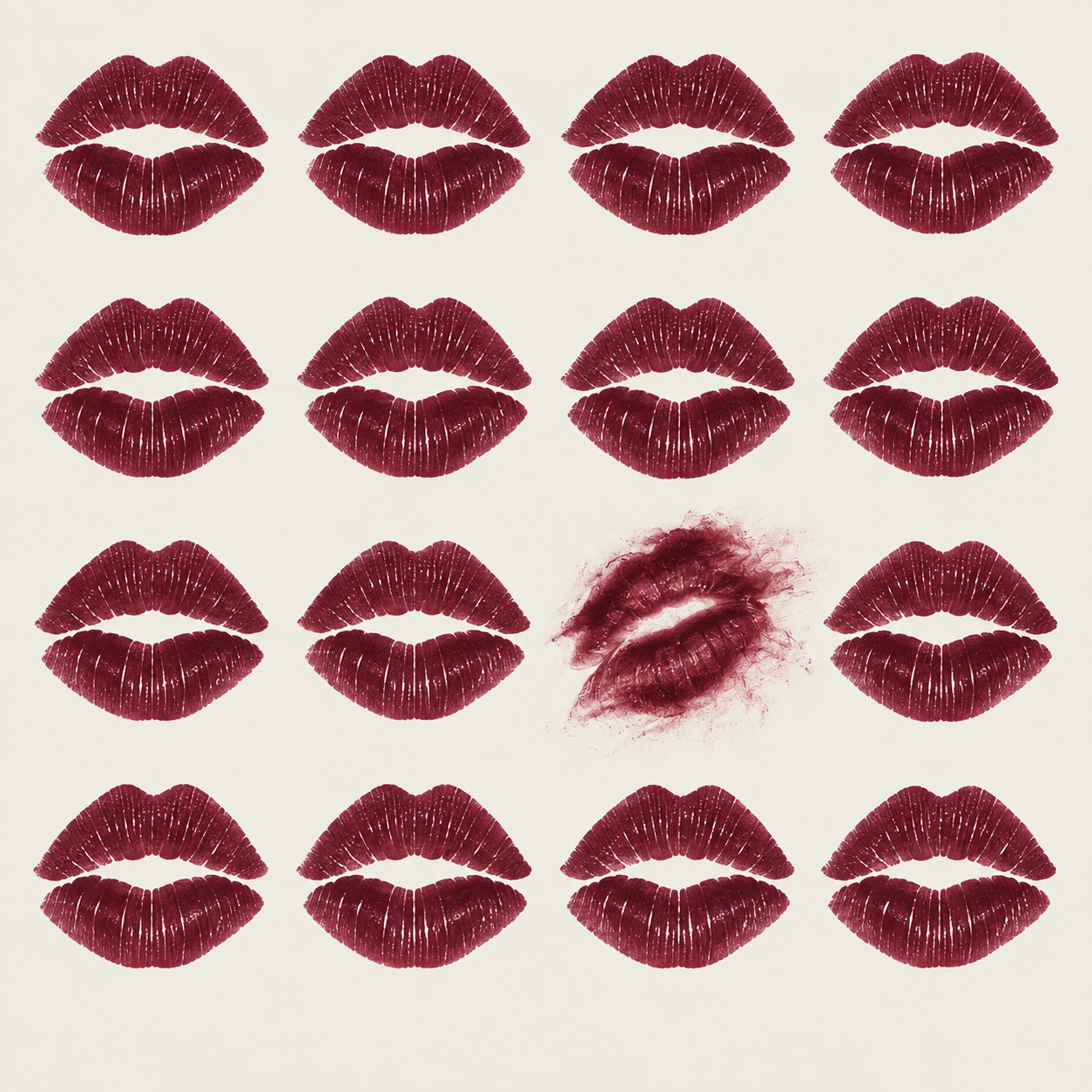
Let’s look at a simple trend currently floating through the zeitgeist: the berry lip.
Every fall, the berry lip returns to beauty forecasts. Sometimes it’s matte, sometimes washed out, sometimes precisely defined with liner, sometimes reflective—but regardless of the finish, it never really disappears from the autumn beauty conversation.
And there is good reason for that. Berry lips—whether stained, richly pigmented or reflective—are beautiful. They can look wonderful on pale skin and deeper complexions and particularly striking against golden and olive undertones. The colour can be softer or deeper, leaning toward burgundy or brown. Because the family of shades is so adaptable and flattering, it finds incredible popularity each fall.
Which invariably leads me to the next question: how many berry lip products have you found yourself buying each fall under the influence of this perennial trend?
Trends themselves are not the enemy. For many of us, they encourage fashion exploration, introduce unfamiliar ideas and allow something new to find a place within our existing wardrobe or beauty repertoire.
That exploration can be incredibly useful when developing personal style. It widens the possibilities for self-representation and self-expression and allows us to experiment with how we present ourselves to the world.
There is an important distinction, though: trends do not define personal style.
Personal style is something you curate over time, through trial and error, gradually embracing the visual possibilities that feel truest to you. Once developed, a genuine sense of personal style can outlast any individual trend. It becomes timeless precisely because it belongs to you.
Once defined, your sense of style becomes a filter for fashion and beauty purchases, allowing you to assess new trends with greater discernment and integrate only the ideas that belong within your existing visual language.
Developing that sense of style requires two things: self-analysis and time.
You have to get to know yourself and, perhaps more importantly, understand what your presence communicates about you—professionally and personally.
How do people respond to you visually?
It is important to remember that personal style isn’t about refusing change. It’s about developing criteria for change. You can absolutely incorporate a new trend into your own style; the difference is that the trend doesn't get to dictate your sense of identity.
September remains a wonderful time to look, experiment and discover what fashion and beauty are proposing next. But there is a difference between following a trend and adapting one.
The question is whether you allow the trend to wear you—or whether you absorb something from it into a visual language that is already your own.
So, this season, rather than asking, What am I supposed to be wearing?, ask something more interesting:
How do I want to be perceived? What feels like me?
Trends will keep changing. Your personal style should be allowed to evolve with them—but it should never be dictated by them.
And in the long run, your wallet may thank you too.